 Alien Invasives
Honey Locust (Gleditsia triacanthos)
07 October 2016
- Other names
-
Honeyshuck, Sweet Locust (English)
Soetpeulboom, Driedoringboom, Springkaanboom (Afrikaans)
leoka (Sesotho) - Invasive status
-
NEMBA Category 1b
CARA 2002 Category 1 - Description
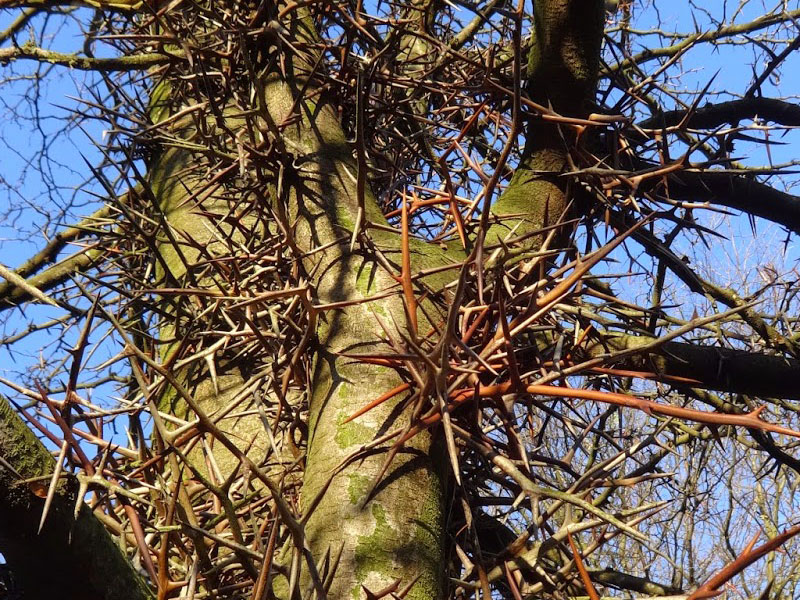
- The Honey Locust is deciduous, spreading tree 15 to 20 metres tall. The trunk and branches have vicious, three-branched spines. The leaves are bright green, bi-pinnate, lance-shaped and minutely toothed. Small, yellowish-green flowers appear from October to November. The seed capsules are flat and twisted brown pods.
- Originally from
- North America
- Where is it a problem?
- Western Cape, Eastern Cape, KwaZulu-Natal, Free State, Gauteng and Mpumalanga
- How does it spread?
- Seed dispersal, often by water
- Why is it a problem?
- It competes with and replaces indigenous species. It forms dense stands along watercourses which can significantly reduce stream flow.
- Uses
- Fodder and donga reclamation
Please help...
Any donations would be greatly appreciated and are much needed to support these efforts. Please consider setting up a stop order with your bank for a regular monthly contribution rather than (or in addition to) a one-off donation. This would greatly assist us in budgeting and planning for the future.
Please EFT to the following account:
| Bank: | Nedbank |
| Branch name: Branch code: |
Morning Glen Branch 198 765 |
| Account Name: | Sandspruit Ullmann Park Association |
| Account Number: | 1014 852 641 |
| Reference: | Your name |
Any questions? Please contact us by clicking here.